
A substation on leased land
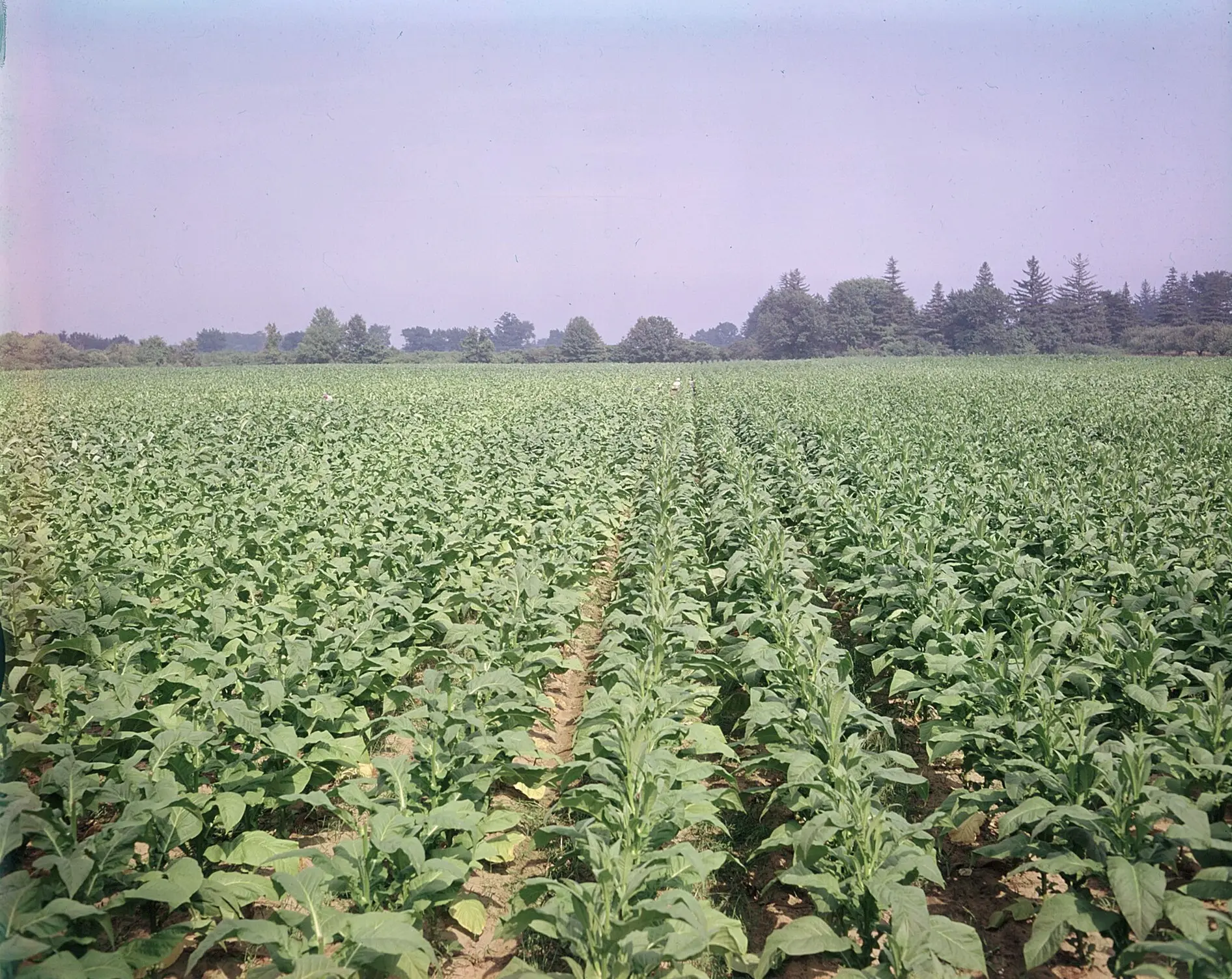
In 1933 the federal government set up a substation of its Harrow station on 20 hectares of leased land about 4 kilometres west of Delhi, to research flue-cured tobacco in the new belt. G. Lloyd Haslam was the first officer in charge.1
A pack barn and three kilns
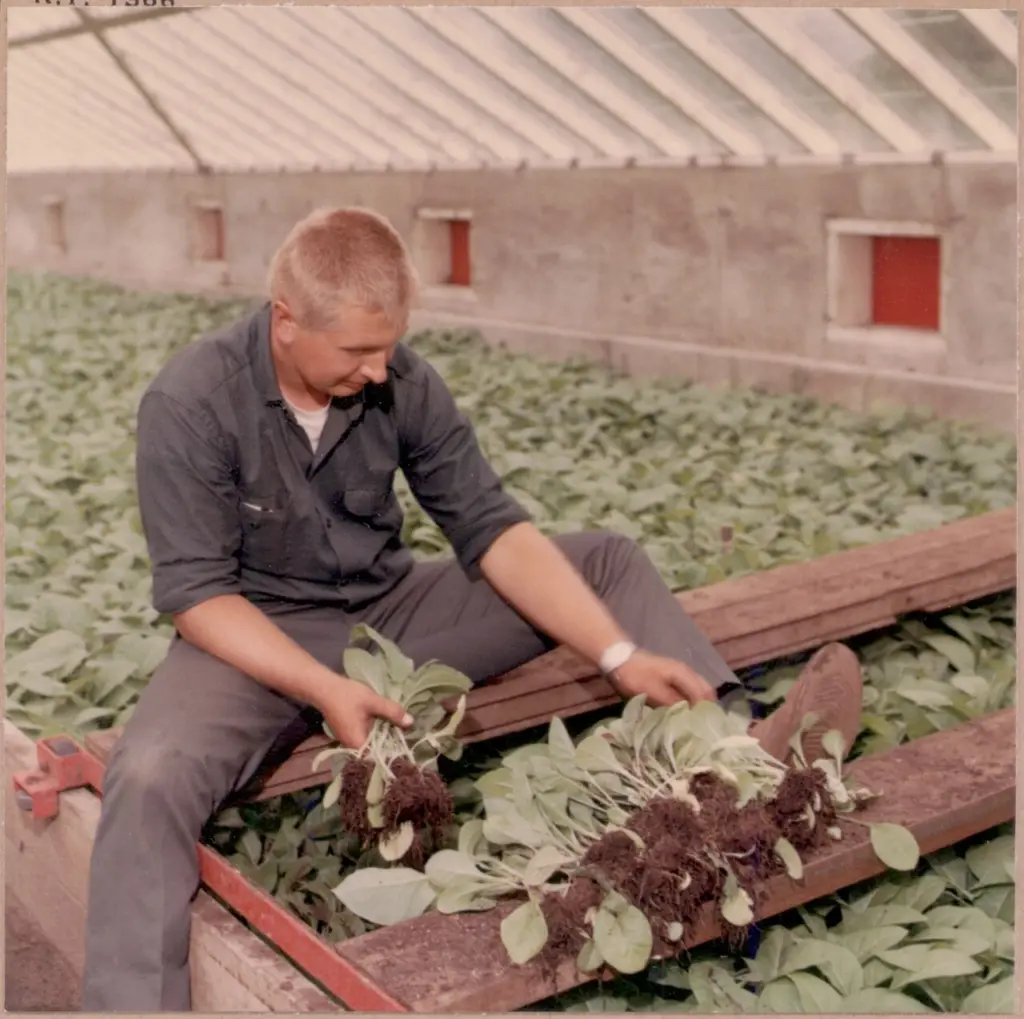
The first buildings were those of a tobacco farm: a two-storey pack barn and three curing kilns. The pack barn held an office, grading and steaming rooms, machinery and a stable for two horses, with tobacco stored upstairs. A glass greenhouse went up that first winter and raised the station’s seedlings until 1953.1
The early work was practical: fertilizer experiments and variety trials on 6 hectares.1
What the station studied
The research soon reached into nearly every part of growing the crop:1
- soil fertility, wind erosion, crop rotation and cover crops;
- tobacco varieties and plant disease;
- fertilization, and topping and suckering;
- irrigation and curing;
- mechanization and harvesting.
Chapters 5, 6 and 12 follow what it learned about growing, the soil and machines.
A permanent institution
The station did well enough that in 1938 the government bought the leased land, together with an adjoining 20 hectares.1 It became an experimental farm in 1962 and a full research station in 1967.1
By 1973 an Agriculture Canada profile reported that about 70 percent of Ontario’s flue-cured crop grew within 20 miles of the station.2 The science had followed the crop to Delhi, and the crop had gathered around the science.