

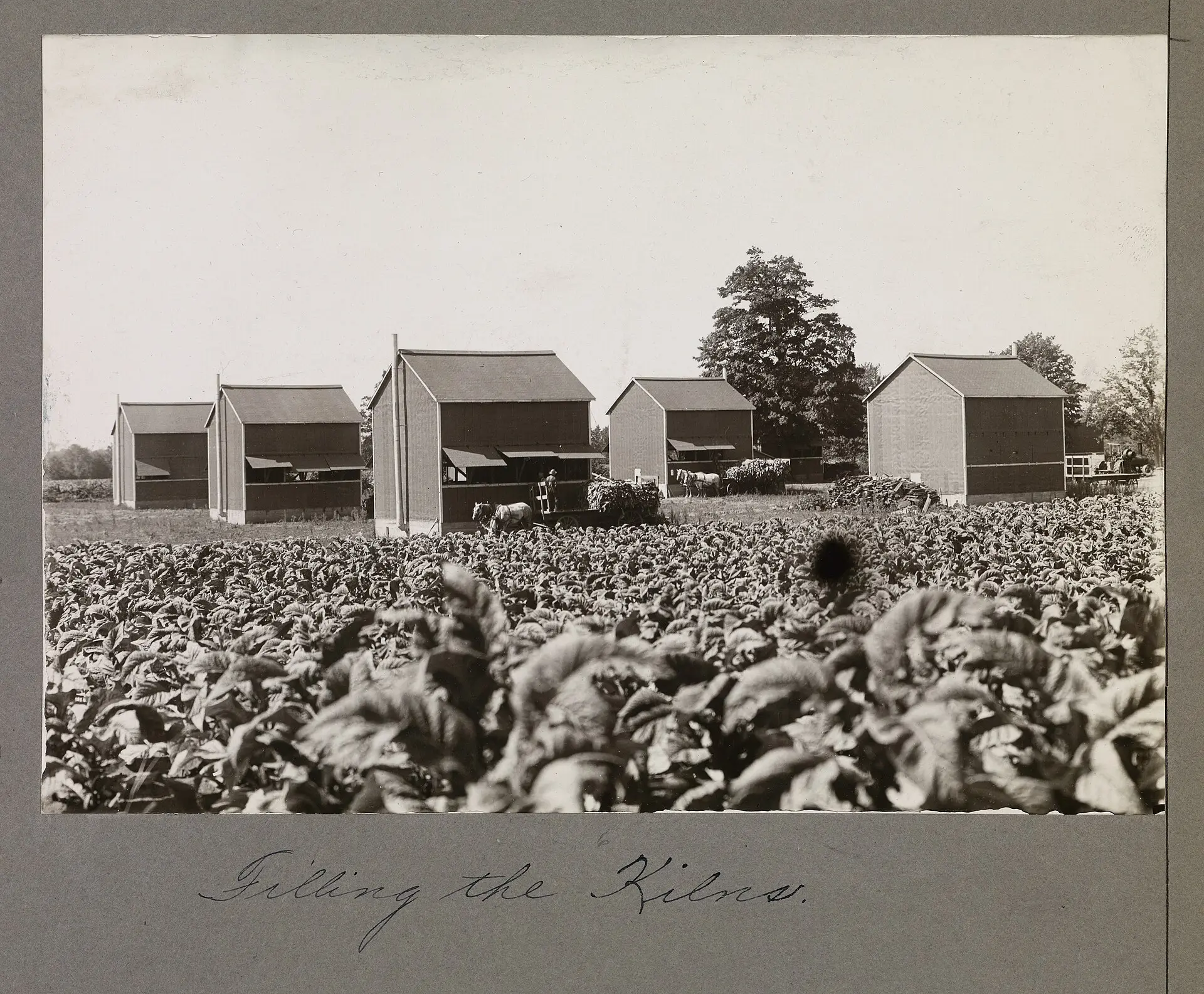
Seedlings and transplanting
A tobacco year explains why the crop shaped Delhi’s buildings and its work. It began with seedlings, raised in seedbeds and greenhouses and set out in the field once the danger of frost had passed.
Frost was a real risk. In 1933 a late frost on 14 June destroyed about 200 hectares of tobacco.1
In the field
Through the summer, growers managed weeds, fertilizer, water, disease and insects. Two jobs belonged to tobacco alone. broke off the flower head so the plant put its strength into its leaves, and removed the side shoots that grew afterwards.
Priming
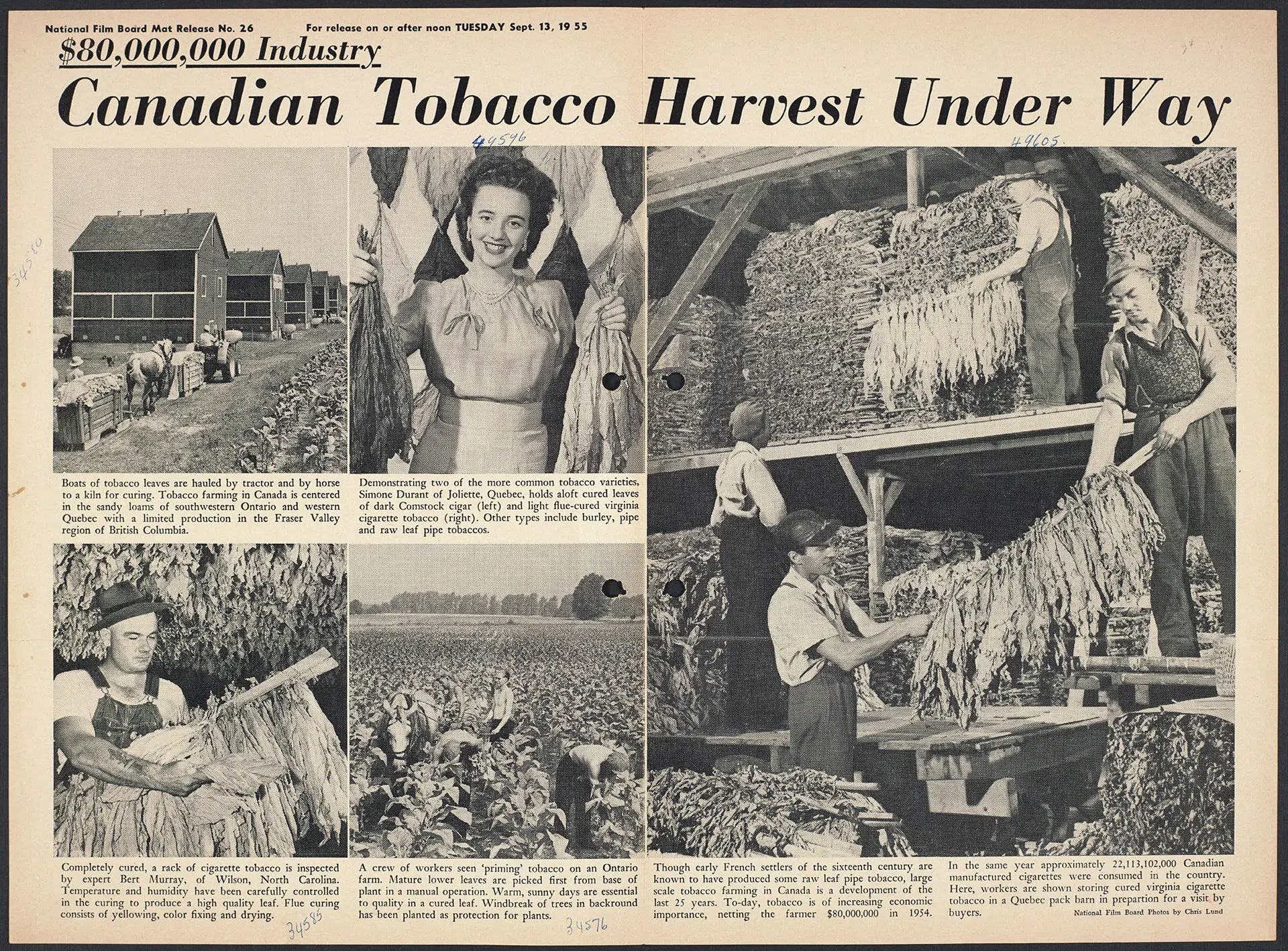
Harvest began around the second week of August and ran into early October. Flue-cured tobacco was harvested by : the bottom leaves ripen first, so they were picked two or three at a time, working up the stalk over several passes.2 A horse pulled a “tobacco boat” along the rows to carry the leaf out of the field.2
Tying and curing
At the kiln, tiers tied bunches of green leaf onto sticks about four feet long, called .3 The Delhi station’s first kilns, built in 1933, each held 900 to 950 laths, about 80,000 to 95,000 leaves, and were heated by two coal-burning furnaces with flue pipes running back and forth below the leaf.1
A 1955 newspaper account from the Durham region says took a week, with the heat raised gradually from 90°F to 170°F.3 Done right, the leaf turned from green to gold. Done wrong, a kiln-load could be spoiled.
Grading and baling
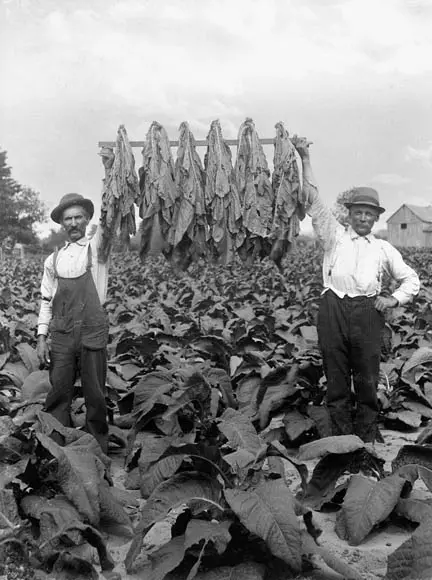
After curing, the leaf was graded by its position on the plant, its quality and its colour, then baled and sold through the marketing system described in chapter 10. Every step, from seedbed to bale, needed people, which is why the harvest filled Delhi every summer.