

A hard first year
Tobacco did not simply fit the Norfolk landscape; farmers and researchers built a system around it. The difficulty showed in the station’s first season. In 1933 blowing sand destroyed about 1,210 hectares of seedlings during transplanting, and the June frost took another 200.1
Wind, sand and frost
The station soon learned how exposed the crop was: sandy soil to wind and drought, plants to hail and to late spring and early fall frosts.1 Much of its early research went into holding the soil and feeding it, through windbreaks, crop rotation, tillage and fertilizer. In the rye–tobacco rotation, a rye crop was disked under, and the regrowth gave winter cover and green manure.1
Kilns and pack barns
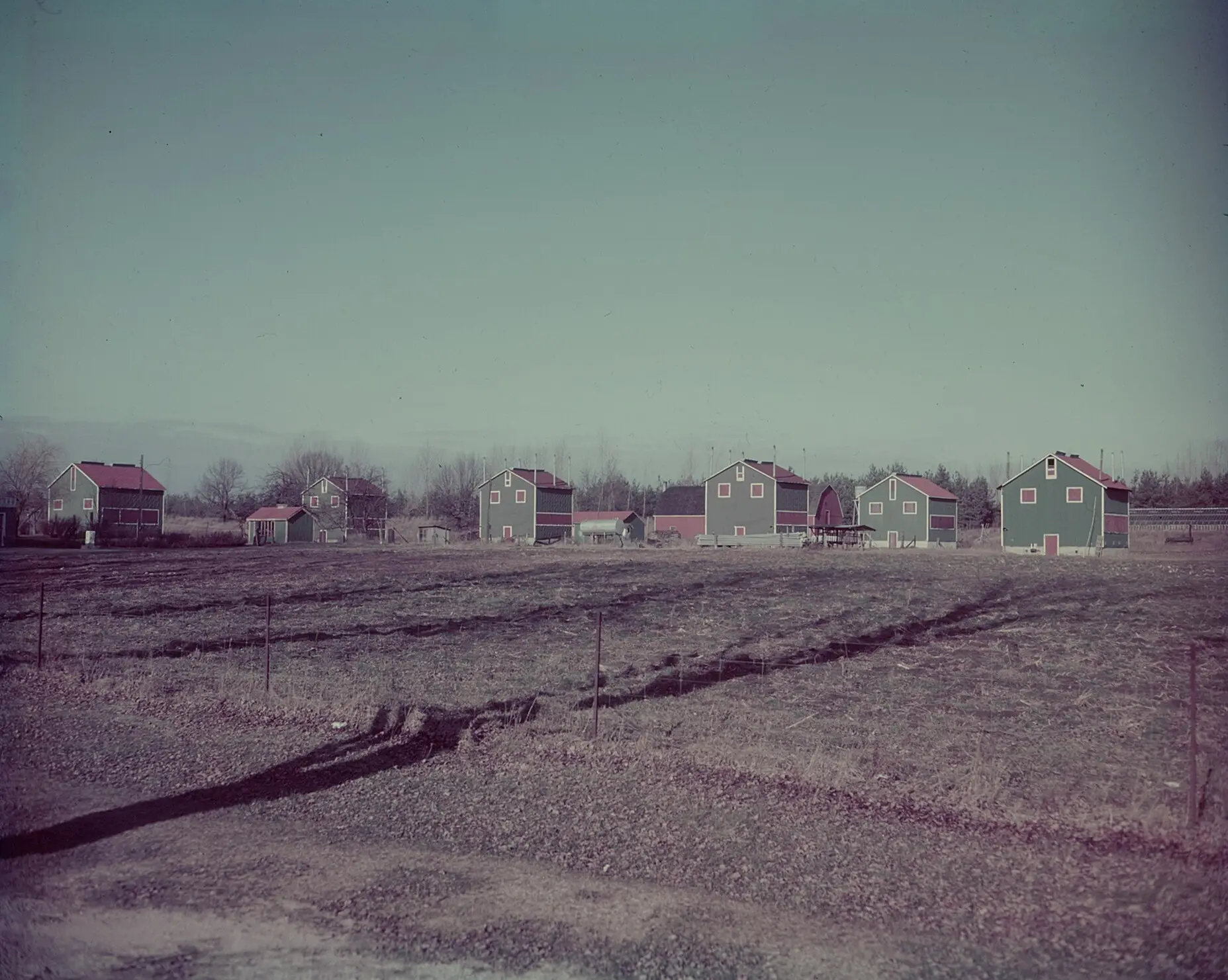
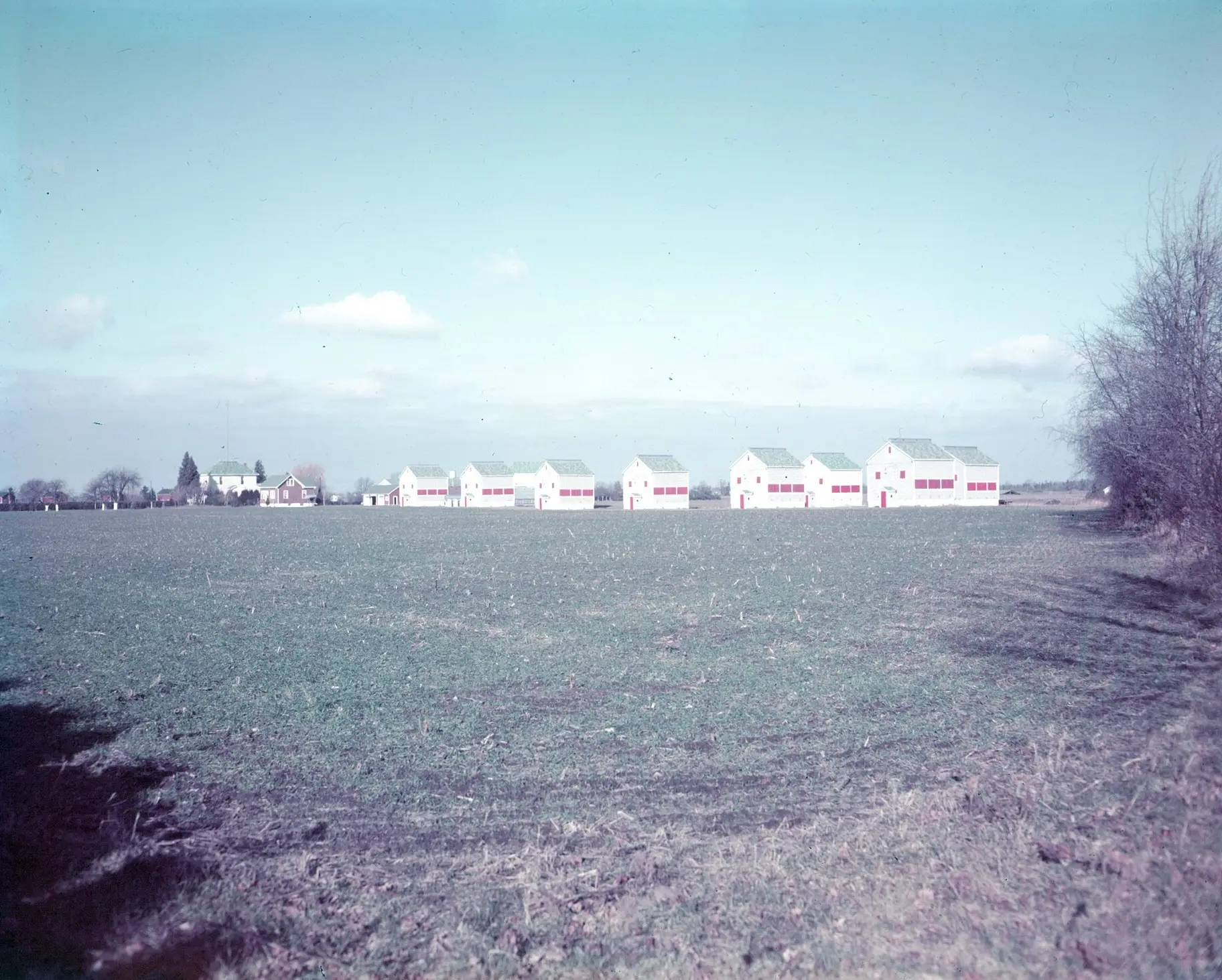
The crop also changed what stood on a farm. Every tobacco farm needed curing kilns, tall closed buildings where the leaf was flue-cured, and a pack barn where cured leaf was stored and readied for market. In the 1930s the Quance mills in Delhi cut lumber for kilns, laths and barns.2
The pack barn became the shape of the district’s memory: the Delhi Tobacco Museum & Heritage Centre was built in 1979 as a model of one.3
Ponds and pipes
Drought held production back until irrigation systems became available in the early 1950s.1 The Delhi station began a formal irrigation research programme in 1953, and in 1956, with the Ontario Agricultural College, it built a plastic-lined storage pond kept topped up from shallow wells.1
What survives
Many kilns and barns have since been taken down, moved or put to new uses. Others still stand on farms. The Multicultural History Society of Ontario records one built in 1923 by Freeman and Pelton on their experimental farm at Lynedoch; whether it survives is something we are still trying to find out.4