A town on Big Creek
Tobacco was in Delhi before the boom. Popular histories of the town say Frederick Sovereen settled at the crossroads around 1812, kept a tavern there for more than thirty years, and made plug tobacco from leaf he grew, cured and pressed himself.1 A Norfolk Heritage walking tour calls him Delhi’s founder.2
The same popular histories say the settlement was known as Sovereen’s Corners, then Fredericksburg, before it took the name Delhi in 1856, and that it was incorporated as a village in 1893.1 We are checking those dates against the Norfolk County Archives, so treat them as unconfirmed for now.
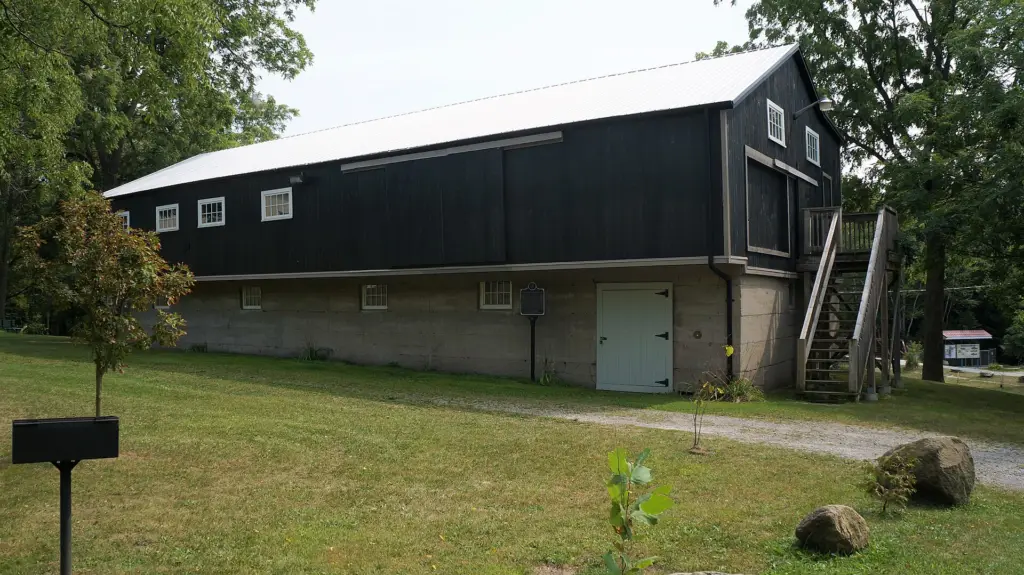
The record is firmer on the creek. The Quance family bought the mills on Big Creek in 1874 and ran them until 1970.2 In the 1930s they would cut lumber for tobacco kilns, laths and barns.2
 Today
TodayThe sand plain
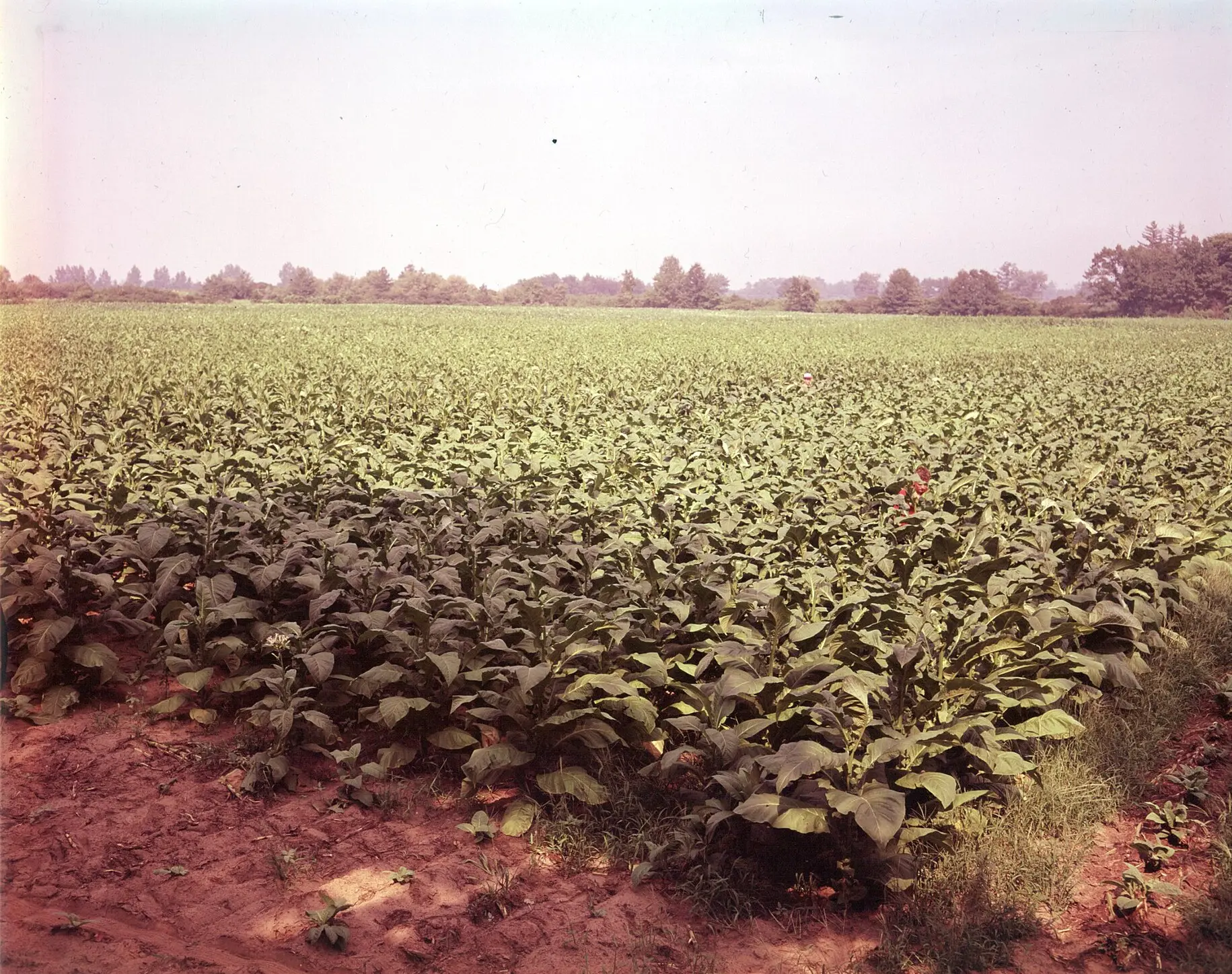
Delhi sits on the Norfolk Sand Plain. Agriculture Canada’s history of the Delhi research station describes the plain in the 1920s as underused land of low natural fertility, better suited to flue-cured tobacco than to other crops, where mixed farming was in a depressed state.3 The light soil blew in the wind and dried out in drought.3
Writing about the region sometimes calls stretches of the plain a “desert” or a “dust bowl”.45 Those words record how the land looked and felt at the time. They are not a measurement, and not all of Norfolk fitted them.
Did tobacco save Norfolk from becoming a desert?
You will hear that tobacco saved Norfolk from turning into a desert. The phrase turns up in local writing about the area’s history.5
The federal research history gives a longer answer: tobacco gave sandy land a profitable use, and years of research into windbreaks, crop rotation, cover crops, irrigation and soil management worked on erosion and fertility.3
We treat “saved from the desert” as a local perspective, not a scientific finding. Chapter 6 tells the longer story.
Old tobacco, new demand
Tobacco was not new to Ontario. Burley, an leaf, had been grown in the far southwest of the province for more than a century before 1909.3 Ottawa took an early interest: it formed a Tobacco Branch in 1906 and opened a tobacco station at Harrow, in Essex County, in 1909.3
The crop that would remake Delhi was a different leaf. tobacco, the light leaf used mainly in cigarettes, was first grown in extreme southwestern Ontario in 1910, with commercial crops by 1913. Cigarette smoking rose with the First World War, and demand for flue-cured leaf rose with it.3
That demand, and the search for land to meet it, is where the story turns to Norfolk. Chapter 2 follows the two growers who tried it.