

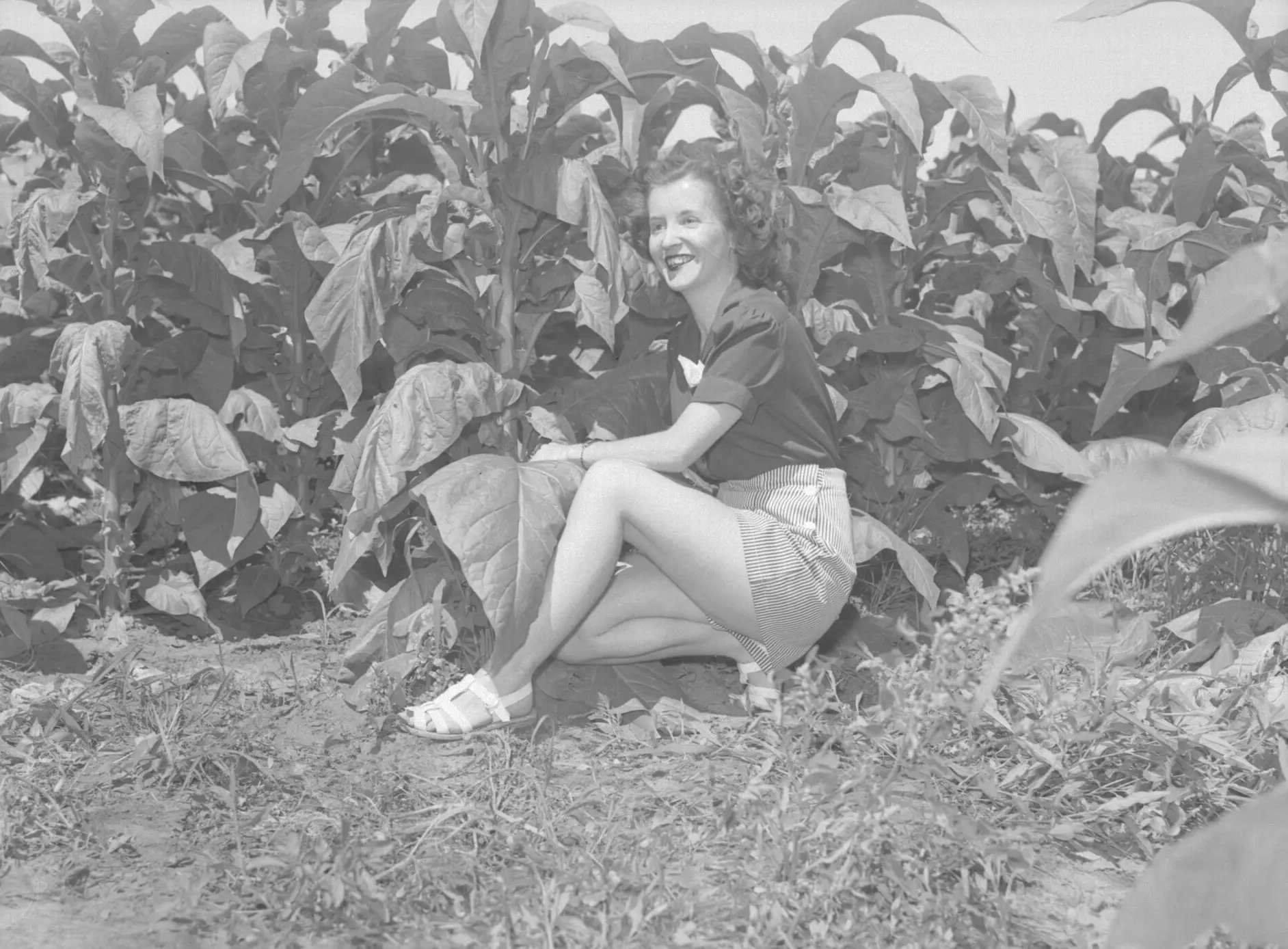
A crop that needed people
Flue-cured tobacco took an enormous amount of work. Leaves were picked in repeated passes as they ripened, then handled, tied, cured, sorted and readied for market. That labour shaped Delhi’s summers.
The wartime harvest
The Second World War made workers scarce. From 1943 to 1945, anyone working on a tobacco farm needed a permit from National Selective Service, and army units helped bring in the harvest.1
The gang
A harvest crew had its own roles. Primers picked the ripe leaves, a boat driver hauled them out of the field, and tiers tied them onto sticks for the kiln.23 One 1955 newspaper account counts the crew it took to fill a kiln: six primers, six sorters and tiers, a stoneboat driver and a racker.2
The National Film Board filmed the harvest around Delhi in the late 1950s for The Back-Breaking Leaf, released in 1959.45
Accounts of the pay vary. Writing in the Port Perry Star in 1987, John B. McClelland remembered that on his first harvest, in the 1960s, the going rate was “$14 per day plus room and board”.6 A former worker, commenting on the NFB’s blog, recalled four summers moving from boat driver to primer to tier, and making 450 dollars in five weeks.4

The “transients”
After the war, large numbers of seasonal Canadian workers travelled into Ontario’s tobacco belt, from Quebec, Northern Ontario, Atlantic Canada and elsewhere. Many were students or unemployed workers looking for several weeks of intensive harvest work.7
The geographer Emily Reid-Musson, drawing on the Marketing Board scrapbooks kept at the Delhi Tobacco Museum, shows that this workforce raised debates about housing, mobility, policing, welfare and how workers were treated.7 It was not always a happy picture.
“Delhi’s camp misery”
Workers from abroad
In 1966 Canada began its Seasonal Agricultural Worker Program with Jamaica, later adding other Caribbean countries and Mexico, and the tobacco belt relied more and more on these workers from the 1970s on.7 More recent fieldwork on two tobacco farms in Delhi included interviews with Mexican and Jamaican workers and with farm owners.9
European newcomers, Canadian “transients” and international seasonal workers are parts of the same story, but they did not share the same experience, and this site tries not to treat them as one.