
Cooking for the gang Feeding the harvest
Every harvest crew had to eat, three times a day, for weeks. On tobacco farms that work fell to women, and it was as much a part of bringing in the crop as priming or curing. What it took, from a Delhi kitchen to the magazine column that celebrated the cooks.
Cooking for the gang
In the tobacco belt’s heyday, the historian Rebecca Beausaert writes, women cooked for upwards of two dozen people, three times a day, for weeks on end; harvest cooking began in earnest in the 1940s and grew as acreages did. It was, she argues, the most important work women did on a tobacco farm, though it was treated as a complement to the men’s.S56
One of her examples is from Delhi. When Mrs. Jean Beneff cooked for a harvest gang of twenty-four in the early 1960s, the dishes from the noon meal alone usually took until 2:20 in the afternoon.S56 Beausaert takes that from a 1962 food column in the Canadian Tobacco Grower, the growers’ magazine.S56
The food mattered to the crop. Ready meals at set times saved the crew’s time, and workers preferred farms known for hearty food.S56 A Port Perry columnist who worked the harvest in the 1960s remembered good food on most farms, and walked off the one that served bread and fried bologna.S34
- A Delhi kitchen
- 24Mrs. Jean Beneff’s harvest gang, early 1960sS56
- Meals
- Three a day, for several weeksS56
- Tables
- Long tables for 12 to 25, in basements, summer kitchens and sunroomsS56
- The column
- Canadian Tobacco Grower food pages, 1953–1988S56
- The cookbooks
- Pick of the Crop, Delhi, 1982 and 1983S56
Dawn to the dishes
Cooks started at dawn. Spring meant freezing desserts, produce and meat for the harvest, and winter was for testing recipes. Basements, summer kitchens and sunrooms were fitted with long tables seating twelve to twenty-five. Around the cooking came the menus, shopping, budgeting, table setting, laundry and dishes, alongside childcare, housework, community work and often the farm’s bookkeeping.S56
Food costs were a constant worry. Cooks swapped advice on cheaper cuts, ground beef in the week and chicken saved for Sunday, and the frugal ones kept cows, pigs, chickens and big gardens and canned what was left over.S56
Eggs, bacon, pancakes or oatmeal.S56
Soup, meat and potatoes, or a casserole, and a dessert made from scratch: pie, cookies, doughnuts, loaves or cake.S56
Anything from a hot dish to cold cuts. By the 1970s homemade pizza, hamburgers and French fries had joined the menu.S56
A menu for every crew
From the 1950s to the 1970s, Beausaert writes, the gangs mixed local help with workers from Quebec, the United States and sometimes Western Europe, and cooks tailored their menus to the crew: grits and rice for workers from the American South, spaghetti for an Italian crew on one farm. The cooks’ own heritage came to the table too, in Hungarian, Polish, German and Belgian recipes.S56
Kitchens changed with the times. In the 1940s and 1950s cooks worked with hot plates, wood stoves and rented frozen-food lockers; by the 1960s many had electric stoves and dishwashers, and a freezer was prized above all. In the 1960s and 1970s packaged foods such as Jell-O, condensed soup and margarine made their way into harvest menus.S56
The column that celebrated the cooks
The best record of this work is a food column. From 1953 to 1988 Shirley Glendinning was food editor of the Canadian Tobacco Grower, visiting farm women in their homes, tasting their cooking and printing their recipes and tips. She did more than 300 of those interviews, and called the women “my ladies”.S56 In 1963 she wrote that there should be “some kind of a medal” for harvest cooks.S56
She collected the recipes in two cookbooks, Pick of the Crop, published in Delhi by Cash Crop Farming Publications in 1982 and 1983.S56 The magazine’s tobacco columnist, David MacLaren, later profiled her for its fiftieth-anniversary edition.S56
Fewer hands, fewer meals
As farms mechanized, crews shrank and so did the cooking. By the 1980s and 1990s women were needed less in the kitchen and more in the field, the kiln and the strip room; by the time Beausaert worked on a tobacco farm herself, around 2000, the bunkhouses had kitchens of their own.S56 Many women who grew up on those farms, she adds, still cook from their mothers’ recipes.S56
More guides
 GuideThe walking tourEleven stops at the halls, churches and museum
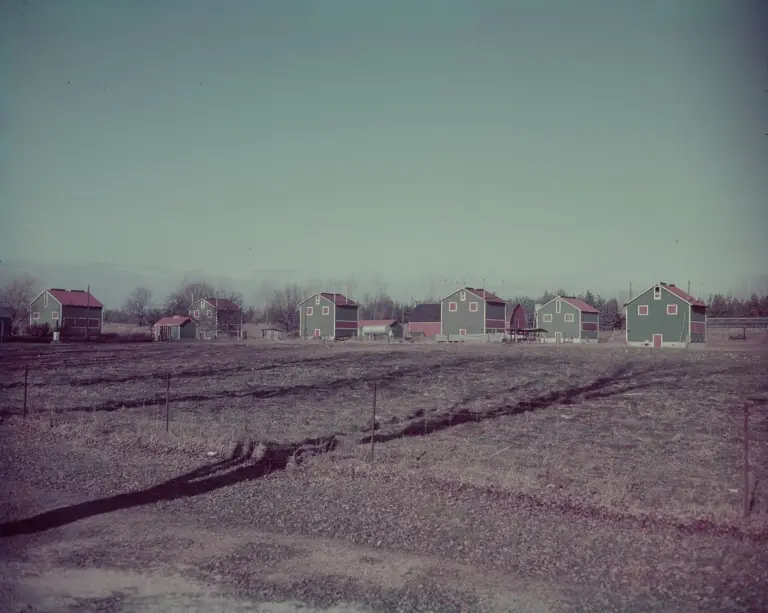 GuideThe tobacco kilnsHow a cure worked, and the kiln you can visit
 GuideThe harvest workersSoldiers, students, “transients” and workers from abroad
 GuideThe Harvest FestivalFrom the 1956 Tobacco Queen to the 2000s
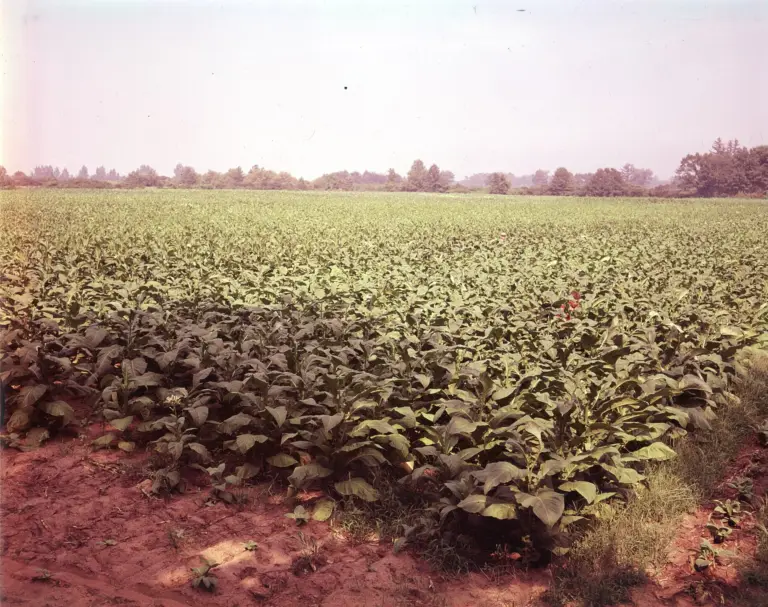 GuideBlue mould, 1979The epidemic that took a third of the crop
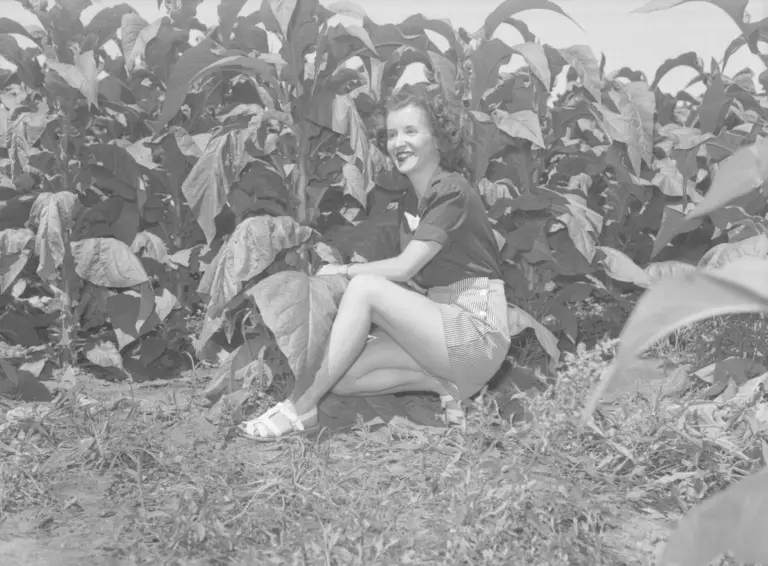 FilmThe Back-Breaking LeafThe NFB’s 1959 film of the harvest
Cooked for a crew?
Harvest menus, recipe cards, photos of the long table: the kitchen side of the harvest is the least recorded. Nothing is published without your permission.