
The people who brought in the crop The harvest workers
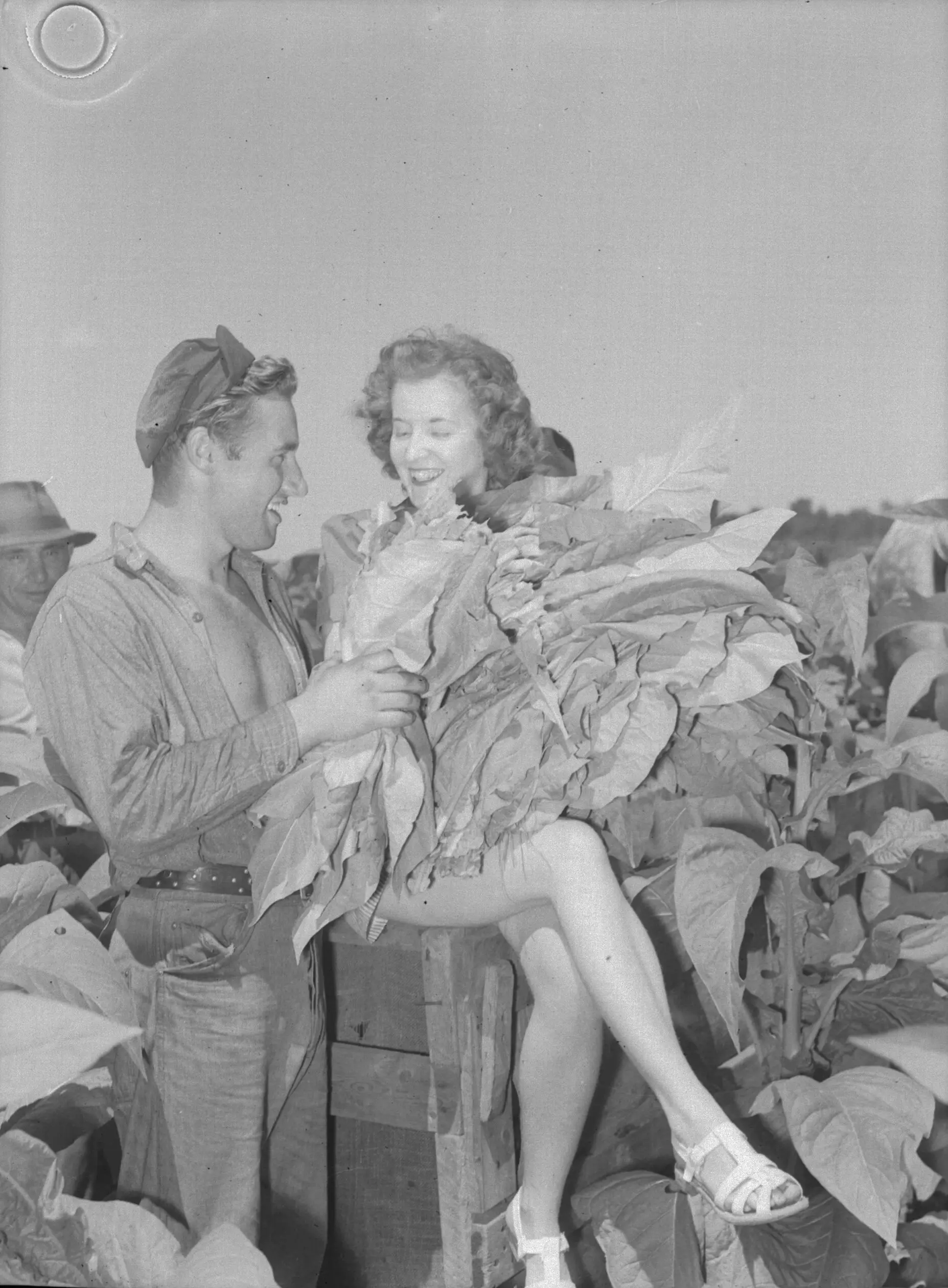
Flue-cured tobacco was picked by hand, leaf by leaf, and every August it filled Delhi with workers: neighbours and soldiers, students and “transients”, and later seasonal workers from the Caribbean and Mexico. Who they were, what the work paid, and how they lived.
Leaf by leaf, by hand
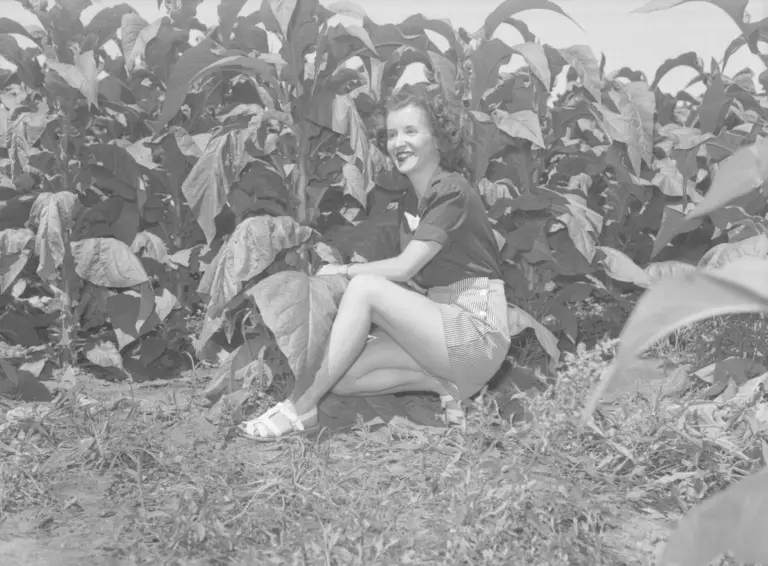
The harvest usually began around the second week of August and ran into early October. The leaves ripen from the bottom of the stalk up, so they were picked two or three at a time, over several passes through the field.S37
It took a crew to keep a kiln filled. A 1955 newspaper account from the Durham region, another Ontario tobacco district, counts six , six and , a stoneboat driver and a ; each plant gave 15 to 17 leaves, picked in about four rounds.S35 A Port Perry columnist who worked the Lake Erie belt in the 1960s remembered primers, boat drivers, kiln hangers and a table gang.S34
- Season
- Aug–OctMid-August to early OctoberS37
- One kiln’s crew, 1955
- 6 primers, 6 sorters and tiers, a driver and a rackerS35
- Pay, 1960s
- $14 a day plus room and boardS34
- Wartime
- Permits needed to work on a tobacco farm, 1943–45S1
- From abroad
- Seasonal Agricultural Worker Program, from 1966S18
Permits and soldiers
The Second World War made workers scarce. From 1943 to 1945 anyone working on a tobacco farm needed a permit from National Selective Service, and army units helped bring in the harvest.S1 Labour was short across farming, and people moved in groups to wherever the emergency was. In September 1943 Ford Stinson, the officer in charge of the Delhi substation, joined a harvest excursion to Alberta in place of his annual leave, once the tobacco was in.S1
The Depression had brought the opposite problem: too many people. In 1939, the historian Edward Dunsworth writes, as many as 10,000 jobseekers reached Delhi, a village of just over 2,000, for a harvest that was a week late; they slept in parks and barns, formed a union, and picketed farms paying below its rate.S64 The parish priest fed them, over the reeve’s objections.S65 Chapter 9 tells that summer in full.
Every August, the gangs came
After the war, large numbers of seasonal Canadian workers travelled into the tobacco belt every summer, from Quebec, Northern Ontario, Atlantic Canada and elsewhere, many of them students or unemployed workers looking for several weeks of intensive harvest work.S18 One reader of the NFB’s blog remembered schoolmates from Dartmouth, Nova Scotia, going to Delhi to pick tobacco from 1966 to 1968; another, a former worker, earned about $450 in five weeks, which paid for school.S30
“$14 per day plus room and board”
McClelland’s account is the fullest we have found of the workers’ side. The day began around seven and ended when the priming gang had met its quota, sometimes by early afternoon: stooping along wet rows in the morning dew, then working on in the afternoon sun, with frost, hail or heavy rain always a threat to the crop. Workers waiting to be hired crowded the Park Inn in Simcoe, where fights were common, and some Simcoe restaurants posted signs that tobacco workers were not welcome.S34
Most of the farms he worked on, he wrote, had good food, clean bunkhouses and hot showers in the greenhouse, and the best farms hired the same crews back every year; good farmers treated workers well, because a walkout cost them money. One farm was the exception: a bunkhouse in a corner of an old hog barn, no hot water, and bread and fried bologna. He left after a couple of days.S34 Who did the cooking is a story of its own: see Feeding the harvest.
Others had it worse. In August 1966 a Toronto Star photograph showed harvest workers keeping warm by a fire on a bare field at Delhi, where a creek served for bathing and shaving; its caption called the place “Delhi’s camp misery”.S32 The geographer Emily Reid-Musson, working from the marketing board’s scrapbooks at the Delhi Tobacco Museum, shows how this workforce raised debates about housing, mobility, policing, welfare and how workers were treated.S18
The seasonal workers
For forty years before that, workers had also come from the American South: tens of thousands between the late 1920s and the late 1960s, curers and field hands alike. That movement was for white workers only until 1966, when it was integrated, and at least twenty-six Black workers were turned away at their assigned farms that first year, Dunsworth documents.S74
In 1966 Canada began its Seasonal Agricultural Worker Program with Jamaica, later adding other Caribbean countries and Mexico, and from the 1970s the tobacco belt relied more and more on these workers.S18
Their working lives have been studied on Delhi’s own farms. For a 2015 study, the geographer Robert Bridi interviewed three Mexican and nine Jamaican workers, two union representatives and two farm owners on two small tobacco farms in Delhi, and argued that the farm is more than a place where tobacco is grown: it is also where workers and employers contest how the work is done.S19
European newcomers, Canadian “transients” and international seasonal workers are parts of the same harvest story, but they did not share the same experience, and this site tries not to treat them as one. The communities that settled are on the communities pages.
The harvest in the story
More guides
 GuideThe walking tourEleven stops at the halls, churches and museum
 GuideThe tobacco kilnsHow a cure worked, and the kiln you can visit
 GuideFeeding the harvestThree meals a day for two dozen, from a Delhi kitchen
 GuideThe Harvest FestivalFrom the 1956 Tobacco Queen to the 2000s
 GuideBlue mould, 1979The epidemic that took a third of the crop
 FilmThe Back-Breaking LeafThe NFB’s 1959 film of the harvest
Were you on a crew?
Photos of the bunkhouse, a pay envelope, a letter home: the workers’ side of the harvest is the least recorded. Nothing is published without your permission.