

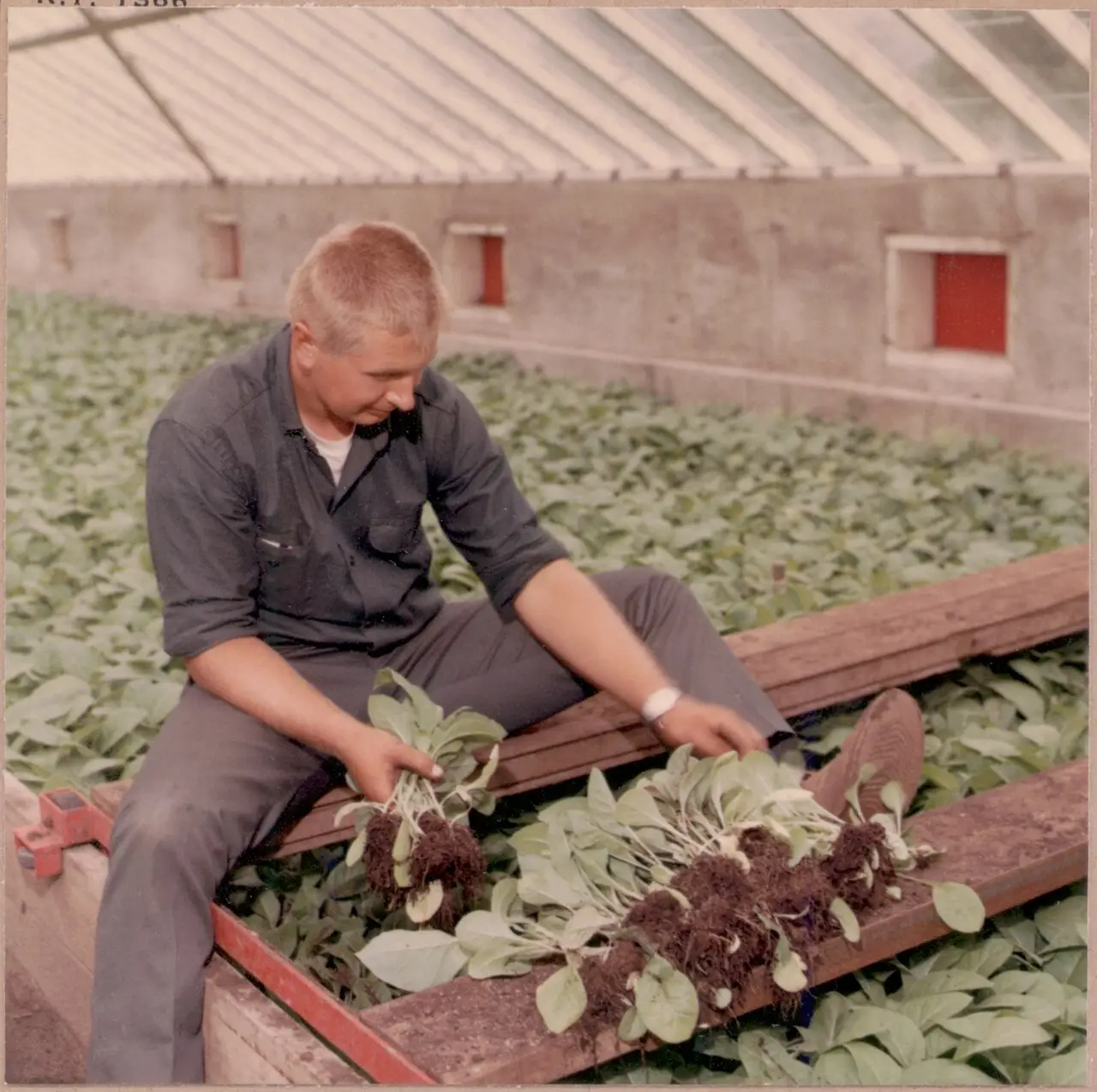
Water for the sand
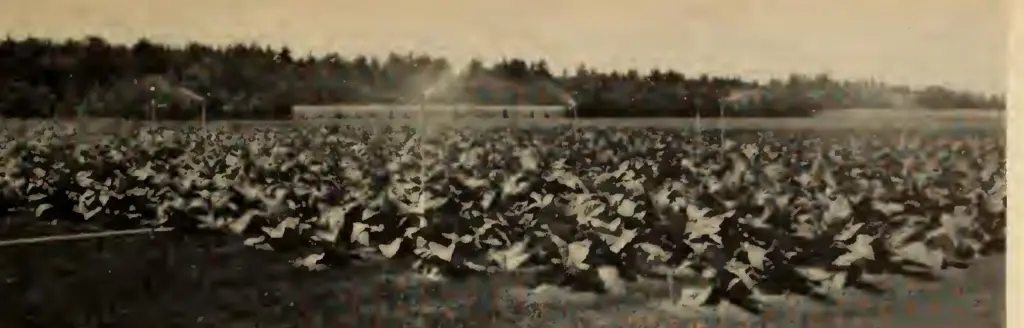
Drought had held production back since the station’s early years. Irrigation systems became available in the early 1950s, and the Delhi station began formal irrigation research in 1953.1 By 1956 it had built a plastic-lined storage pond with the Ontario Agricultural College.1
The station’s tobacco specialist, E. K. Walker, reported the results in 1959. The share of the flue-cured crop under irrigation had climbed from less than 10 per cent to an estimated 70 per cent in 1958. From 1953 to 1956, irrigated tobacco beat unirrigated by an average of 5.5 cents a pound, 248 pounds an acre and $234 an acre in gross return, while irrigating cost $40 to $50 an acre in a dry year.2
Better kilns, fewer hands
From 1954 the station built kilns to study forced-air curing, working with tobacco companies and the Ontario Research Foundation.1 Over the following years Ontario developed its own low-profile, forced-air kilns, along with mechanical tying machines, kiln elevators and priming aids.1
The station’s kiln studies changed the buildings too, showing the value of ridge ventilators, indirect bottom ventilators, vestibule entrances and insulation, for easier curing and fire prevention.1 Our guide to the tobacco kilns follows the kiln from coal and laths to forced air.
Canada’s first bulk kiln
Bulk curing, which used high-volume forced air, was developed by researchers in North Carolina. In 1961 the Delhi station bought a commercial bulk kiln from the United States to test. It was the first in Canada.1
Bulk curing did away with tying leaves by hand onto thousands of laths. By the early 1980s about 40 percent of the kilns in Canada were bulk kilns, many of them designed locally.1
The station kept building. In 1968 it put up a building to hold 150 small curing chambers, each taking 15 laths against the 1,200 of a conventional kiln, so that small test lots could be cured separately; it built bulk kilns of its own from 1972, and in 1978 became home to the Delhi Engineering Research Group, run with the growers’ marketing board and the Canadian Tobacco Manufacturers’ Council.1
Machines in the field
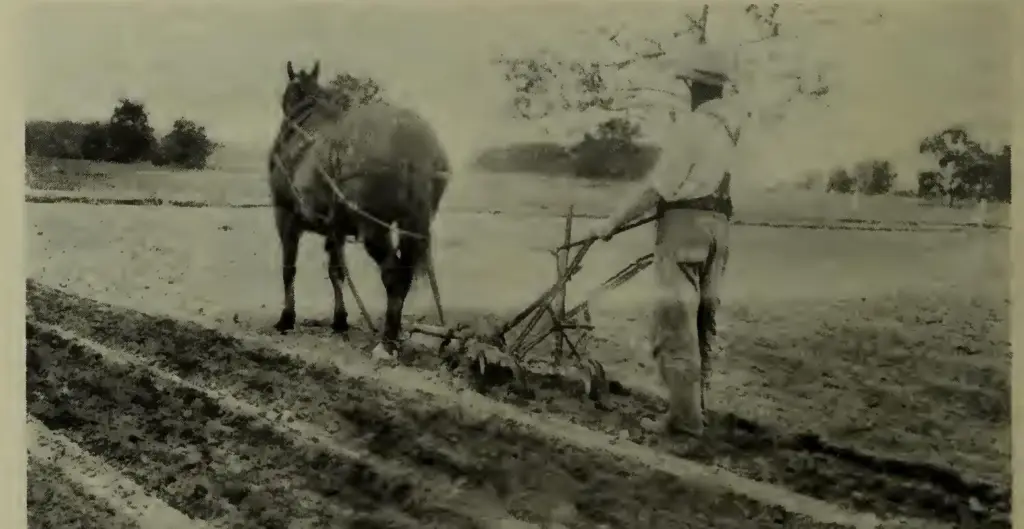
Priming changed as well. In the 1960s mechanical priming aids appeared, on which primers rode along the rows and dropped the leaves into attached bins; later, mechanical harvesters stripped the bottom leaves with turning rubber discs and carried them up to a hopper, a method the Elgin County Archives call the “tangled leaf method”.3 A 1970 photograph from near Aylmer shows a worker driving a priming machine through an early crop.3
The tying table went the same way. Tying leaves to laths had been the job of a table gang, mostly women, but by the 1960s most of it was done by a machine that stitched the leaves together just above the lath; people still fed it the leaves and laths. An old-style kiln stood 14 to 16 feet high on a 22-by-24-foot cement foundation and held about 1,200 laths of about 90 leaves each. Bulk kilns hung the leaf instead on metal racks whose rods pierced it, slid in along runners, and many farms later moved on to bin kilns.4
The biggest saving was in people. Automated harvesters were expensive, the Elgin County Archives note, but they cut a harvest crew from about ten to two or three, usually local students or labourers. Moves to bring farm hands into unions pushed many growers to make the change.4
In the kiln, older furnaces burning coal or wood gave way to oil and natural gas,5 and later to heat exchangers retrofitted into existing kilns; after several kiln fires in the 2005 season, Ontario’s fuel-safety regulator warned growers to have the whole assembly inspected before each cure.6
 Today
What machines changed
Every machine that took over a job also changed who was needed at harvest, and how many. That shift ran alongside the changing workforce described in chapter 9.
It changed the kitchen too. As farms mechanized and crews shrank, the historian Rebecca Beausaert writes, there were fewer harvest meals to cook, and by the 1980s and 1990s farm women were needed less in the kitchen and more in the field, the kiln and the strip room.7 See Feeding the harvest.