
The announcement
The end was announced in Delhi. On 1 August 2008, federal Agriculture Minister Gerry Ritz came to the Delhi tobacco exchange to announce more than $300 million for Ontario’s flue-cured growers: $286 million for a Tobacco Transition Program to help them leave the industry, and $15 million for community development.1
The federal money worked out to $1.05 for each pound of quota, matching the federal share of what the growers’ marketing board had last asked for, and payments were based on proposals from the board that the government accepted. Growers could use it to move into other crops or to leave farming altogether.1 The local MP, Diane Finley, said producers and their families would “be able to bring closure to what has been a very stressful time.”1
The $15 million for community development became the Sand Plains Community Development Fund, which lent to new and growing businesses and funded community projects across the tobacco counties from 2009 to 2012.23 Chapter 16 follows what it paid for.
The audit
In 2011 the Auditor General of Canada reviewed the program, putting its cost at $284 million. Its aim was for farmers to leave tobacco and not go back.4
The audit found the program’s design had been rushed, and that it lacked safeguards against recipients undermining its aims, for example by renting their land and equipment to family members or working in tobacco for them.4
The report was tabled on 22 November 2011. “Design of the Tobacco Transition Program was rushed,” John Wiersema said for the Auditor General’s office, and the case showed the importance of “considering what could go wrong, and how to prevent it.”4
The payments went to about 1,000 quota holders, Better Farming reported from the audit, and more than half of them were not active tobacco producers; quota could be rented out, as Chapter 14 explains. Active producers fell from 446 in 2008 to 118 in 2009. By 2010 there were 251 again: some who took the payment had passed land and equipment to relatives, who kept growing under the new licences.5
The end of quota
The auction exchanges were closing too. Tillsonburg closed in 2007, and the Delhi exchange, the last of the three, closed in 2009 when quota was abolished.6
 Today
What 2009 meant
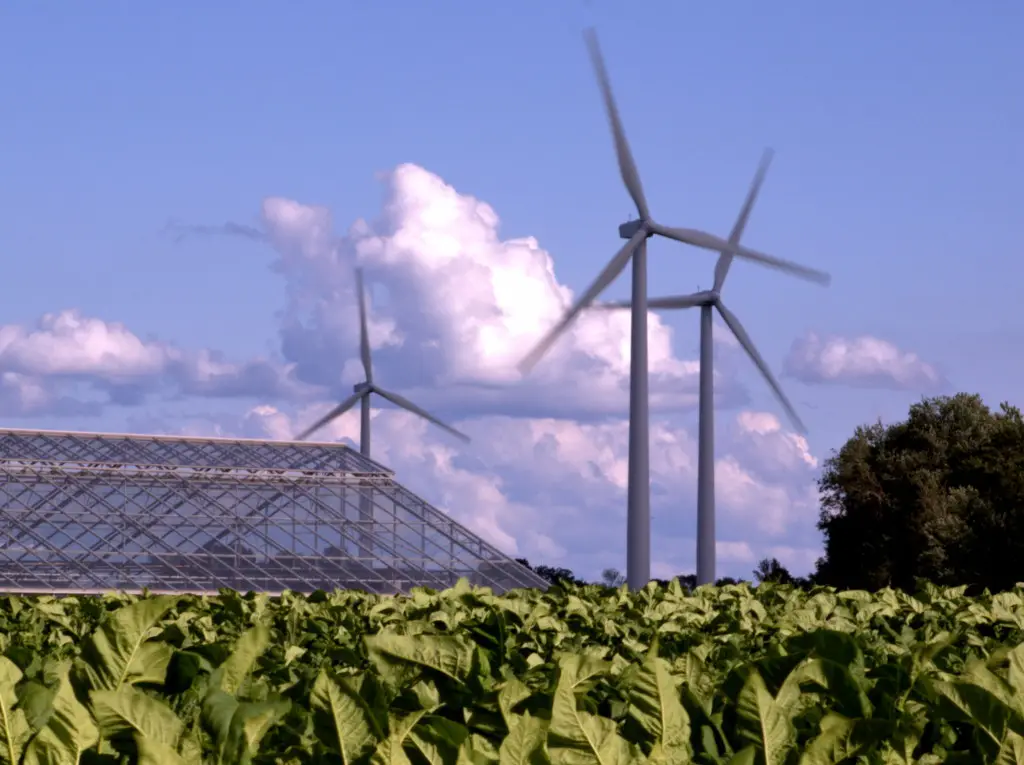
2009 did not erase tobacco from Norfolk’s fields overnight. But it ended the quota-and-auction system that had organized the industry since 1957, and with it the tobacco economy Delhi had known for generations.
In place of quota came licences. From 2009 a grower needed a contract with a buyer to be licensed, and the board, once the seller of the whole crop, became the body that issues the licences and enforces the rules.7 Many farmers took the buyout and left tobacco for good.7 Some kept growing. A 2015 study of two small tobacco farms in Delhi interviewed their Jamaican and Mexican seasonal workers and their owners,8 and in Norfolk the Oliveira family, Portuguese immigrants who arrived in 1967, were still growing tobacco in the 2010s.9
The growers’ claim
The buyout did not settle every account. Tobacco growers brought class actions of their own, claims about the historical pricing of their leaf that said the tobacco companies had failed to make payments due under agreements with the growers’ marketing board.10
When Imperial Tobacco, Rothmans, Benson & Hedges and JTI-Macdonald sought creditor protection in March 2019, those claims were folded into the companies’ restructuring alongside the provinces’ health-care claims and the smokers’ class actions. The resulting plans set aside $32.5 billion, to be paid into settlement trusts over many years, with a share for the tobacco producers. The growers backed the plans unanimously, the court noted, and Chief Justice Geoffrey Morawetz approved them on 6 March 2025.1011