
From tobacco to new crops
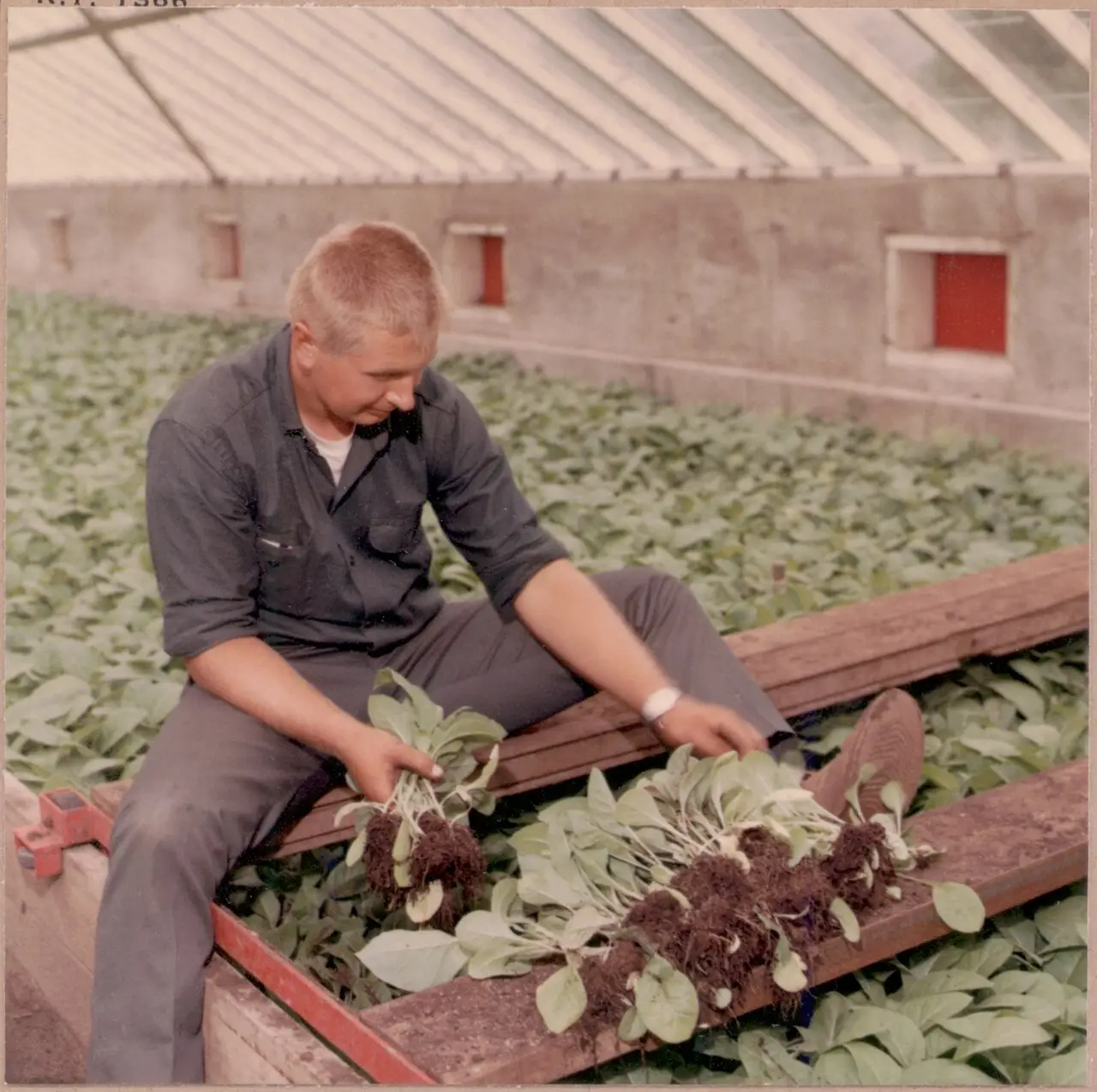
In 1933 the federal government set up a substation of its Harrow research station on 20 hectares of leased land about 4 kilometres west of Delhi, to study flue-cured tobacco in the new belt. G. Lloyd Haslam was the first officer in charge.S1 The first buildings were a two-storey pack barn and three curing kilns, and a glass greenhouse went up that first winter.S1
It grew quickly. The government bought the land, with an adjoining 20 hectares, in 1938; the station became an experimental farm in 1962, bought another adjoining 20-hectare farm in 1965, and became a full research station in 1967.S1 Its first field day, in August 1934, drew 400 visitors; by the early 1980s the annual event drew as many as 5,000.S1
Its work shaped the crop: irrigation research from 1953, a storage pond in 1956, and Canada’s first bulk kiln, bought for testing in 1961.S1
Much of that work was about the kiln. The station studied forced-air curing from 1954 to 1956 with the tobacco companies and the Ontario Research Foundation, built a hall of 150 small curing chambers in 1968, each holding 15 laths, to cure test lots separately, and put up bulk kilns of its own from 1972. From 1978 it housed the Delhi Engineering Research Group, run with the growers’ marketing board and the Canadian Tobacco Manufacturers’ Council.S1 Before tobacco ended, it was already looking ahead, with a University of Guelph peanut programme from 1977 to 1980 and a new crops programme from 1981.S1 Our guide to the tobacco kilns tells the kiln story.
By 2012 the station, by then called the Southern Crop Protection and Food Research Centre, was working on specialty crops such as ginseng, hemp and hops, field vegetables, and minor-use pesticide trials, on 160 acres west of Delhi.S44S45 A 2012 Better Farming report described it as “a centre of tobacco research in its heyday” that had become “a showcase for alternative crops.”S43 It was cut in the federal budget of March 2012 and closed on 31 March 2013.S43S45 An industry study that year weighed uses from a water research institute to an agri-food innovation centre.S45
The station stood on Schafer Side Road, west of Delhi.S44 Mike and Sandra Kloepfer, owners of the Norfolk trailer maker Titan Trailers, bought the 65-hectare property, between Delhi and Courtland, in 2015.S90S91 For a few years the Southwest Fire Academy trained there under a temporary county permit that ran until 2019; then the buildings stood empty.S89S90 In 2022 they turned the old research building into Schafer House: seven furnished apartments with common rooms and greenhouses for growing food. It opened that August to Ukrainian refugees, many of them working at Titan, who were given three months rent-free and then below-market rent while they settled.S83S85 The first plan had been to house Afghan refugees, and no government money went into the conversion; it was, Mike Kloepfer said, “our way of giving back to the county and the local area.”S90 By the time the Kloepfers held an open house, more than 25 people had moved in.S91 The land is still farmed. The fields are still farmed, and a 2025 county planning report lists the old station building, a former weather station, greenhouses and storage buildings still standing together on about 10 acres.S84 In October 2025 Norfolk County council approved a rezoning to let the old station serve as permanent transitional housing.S86
Photos wantedThe station, any decadeField days, the kilns, the greenhouses, the staff. We don’t yet have a photo of the station we can share.Share a photo →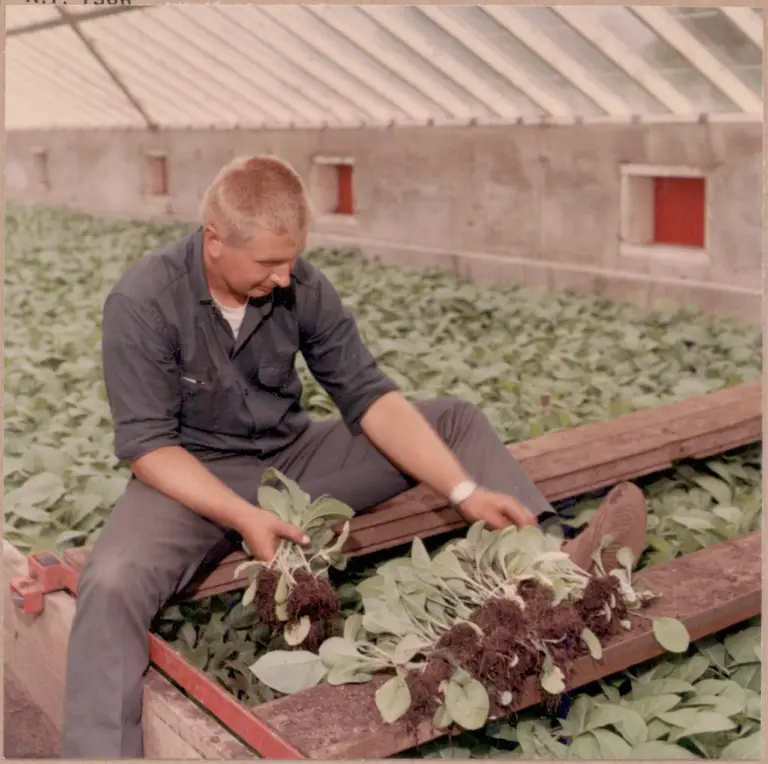
Did you work there?
If you or your family worked at the Delhi station, we’d love to hear what it was like.