
The museum
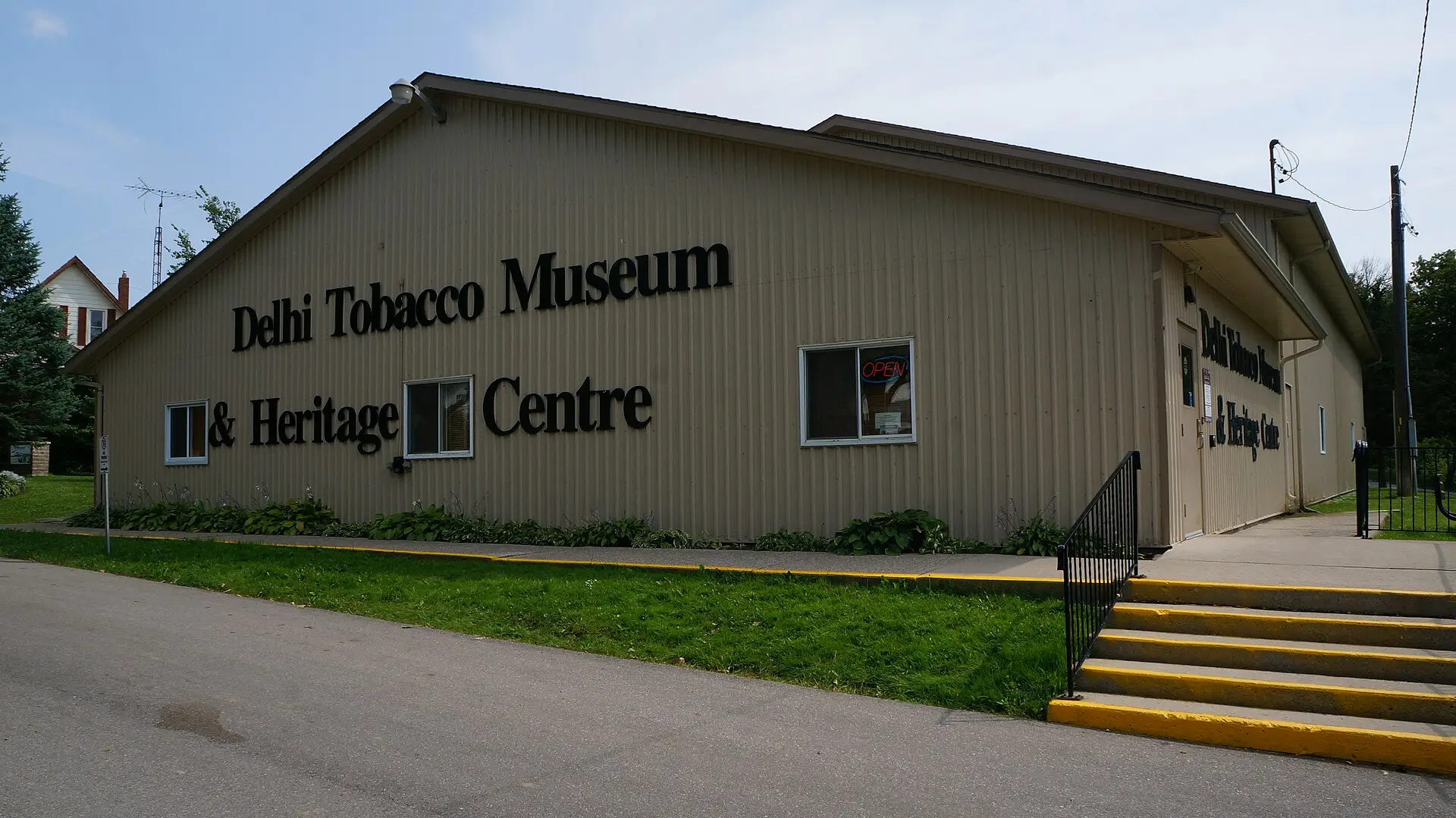
The Delhi Tobacco Museum & Heritage Centre is part of the history itself. It stands on a small hill above Quance Park, built in 1979 as a model of a typical tobacco pack barn.1
The North American Reciprocal Museum Association’s member listing describes it as Canada’s only tobacco museum.2 We are still confirming its early history, including the name it first opened under. If you know it, tell us.
Its exhibits cover tobacco, ginseng and alternative agriculture, Delhi’s community history and its multicultural heritage. On the grounds stands a heritage-designated tobacco kiln with stick-hung tobacco still inside.1 The museum was also a partner in the Delhi Tobacco Project.3 If you’re anywhere near Delhi, go and see it.
 Today
TodayKilns on the land
Kilns and pack barns still stand across the tobacco belt, some empty, some reused. Most are on private land, so this site shows them by general area only. The oldest we know of on paper is the kiln Freeman and Pelton built at Lynedoch in 1923; we are still trying to find out whether it survives.4
The halls
The Hungarian House, dedicated in 1949, and the German Home, opened in 1950, still recall the communities tobacco drew to Delhi.56 The Belgian Club, whose hall opened in 1948, closed in 2017.7
The voices
The richest thing the tobacco years left may be the recordings: 308 cassettes, about 267 hours, made between 1977 and 1988 by the Multicultural History Society of Ontario and the Delhi Tobacco Museum.3 They hold the memories of the people who grew, primed, tied, cured and sold the crop, many in their own languages.
The story keeps growing with every family photo, letter and memory people share. Add yours.